
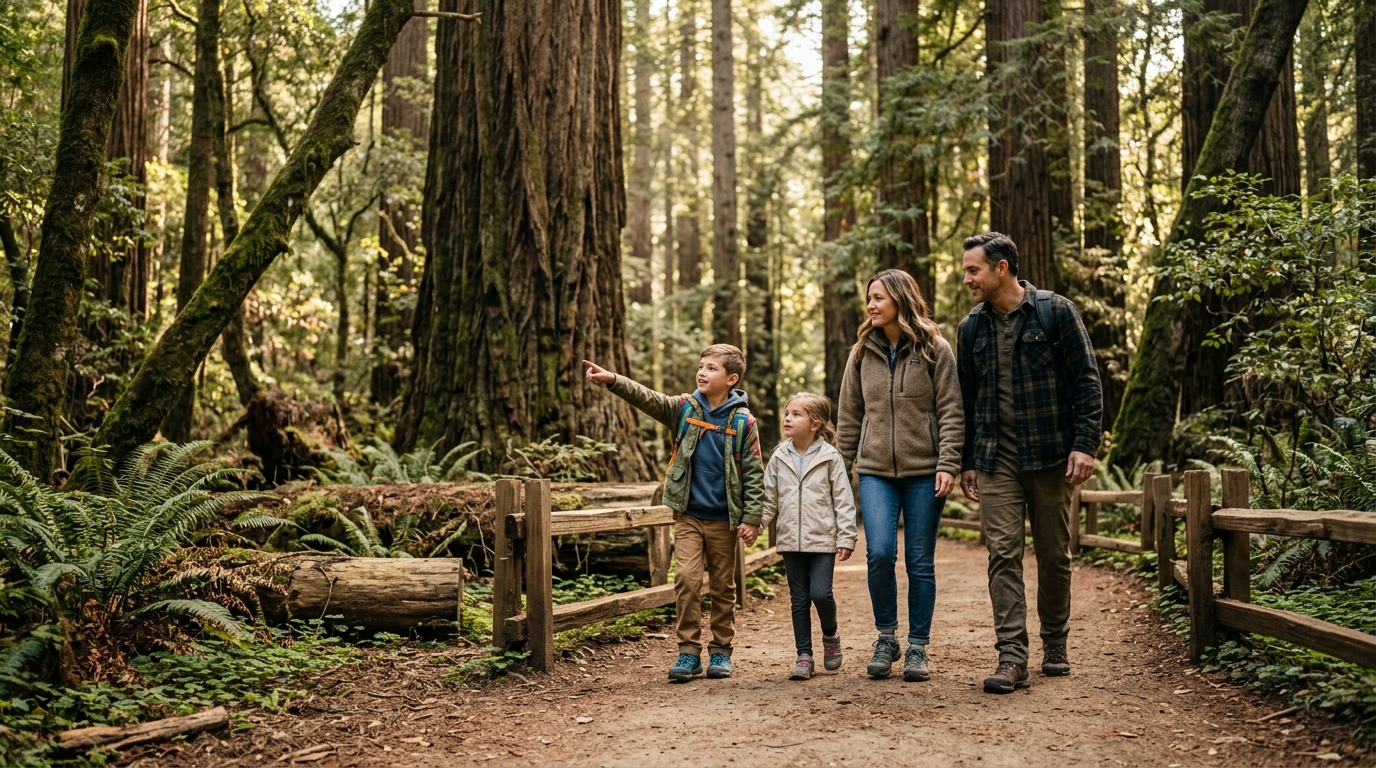
The California State Parks Free Fourth Grade Pass 2026–27 gives eligible families a simple way to explore more of the state without paying the normal day-use entrance fee at participating parks.
For the current school year, California public-school fourth graders can use the pass at 54 state parks. The pass covers unlimited eligible visits during its valid period.
The program also changed in 2026. California State Parks renamed it the Free Fourth Grade Pass and opened sign-ups earlier. Families no longer need to wait until September to get started.
That makes the pass more useful for late-summer trips, fall weekends, winter desert visits, spring outings, and much of the following summer.
However, the pass does not make every state park activity free. Camping, boat fees, special events, extra vehicles, and other added charges can still cost money.
This guide explains who qualifies, how the pass works, where families can use it, and how to turn the program into a practical California family trip.
How the California State Parks Free Fourth Grade Pass 2026–27 Works
The program is part of California’s effort to make outdoor recreation easier to access for families.
California State Parks says the pass is available to fourth graders who live in California and attend public school. A parent or guardian applies on the child’s behalf through ReserveCalifornia.
The process does not require a complicated application. A parent or guardian needs a ReserveCalifornia account and basic contact information.
Once the pass arrives by email, families can print it or use an accepted digital version when visiting a participating park.
Who Qualifies for the Free Fourth Grade Pass
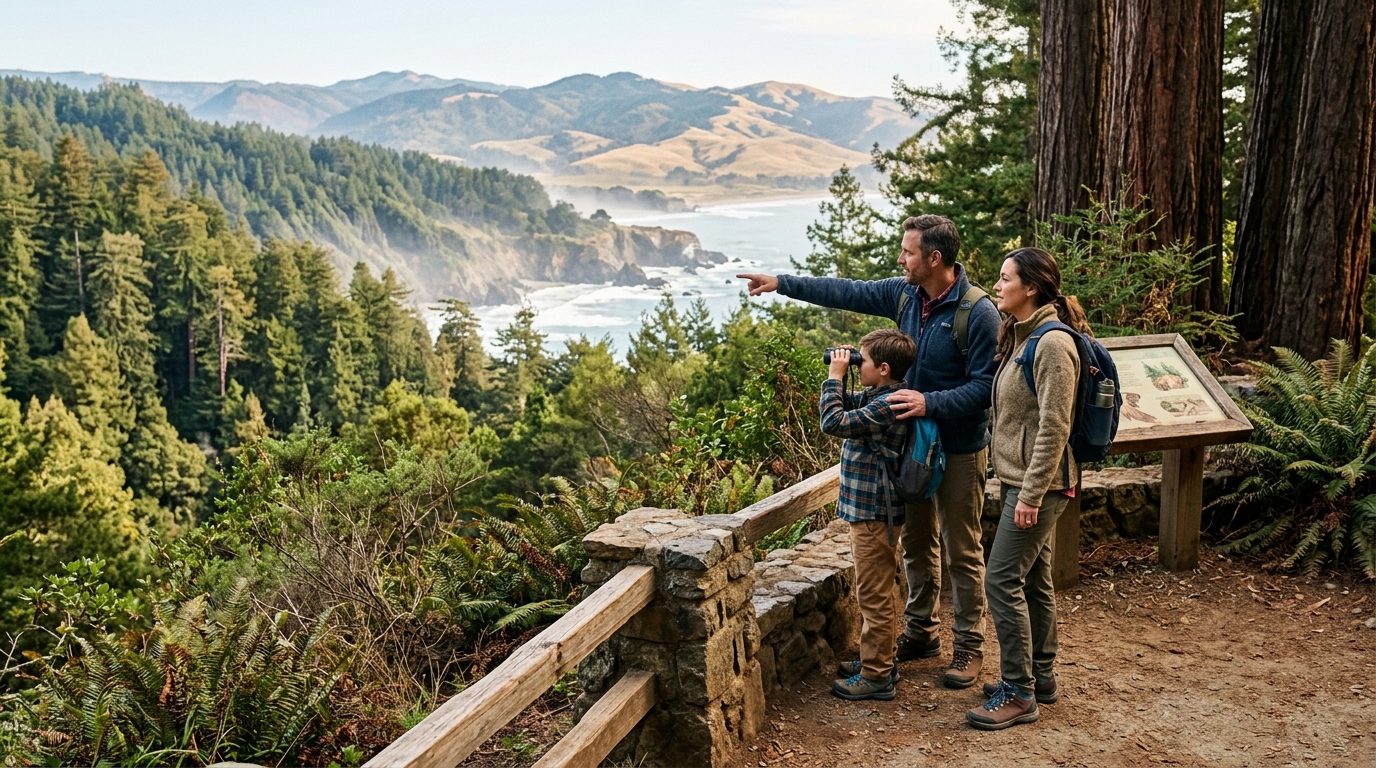
The main eligibility rule is straightforward. The child must be a California fourth-grade student attending a public school.
The fourth grader must also be present when the family uses the pass. Families cannot transfer the pass to another group for a trip without the eligible student.
For vehicle-based admission, the pass can cover the people riding in one private, noncommercial vehicle with the fourth grader.
When a park charges admission by person instead, the program can cover the eligible fourth grader, children age 15 or younger, and up to three accompanying adults.
That makes the pass useful for parents, guardians, siblings, and even a few friends when everyone travels together under the program rules.
The 2026–27 Pass Can Be Used for Up to 13 Months
One of the biggest 2026 improvements is the longer practical use period.
Incoming fourth graders can now sign up starting in August instead of waiting until later in the school year. The current pass remains valid through August 31 after the child’s fourth-grade year.
That gives some families up to 13 months to plan visits.
The longer window works especially well in California because park seasons vary so much.
A family could visit a redwood park in fall, explore a Southern California desert park in winter, take a Sierra foothill trip in spring, and plan another coastal outing during summer.
There is also no limit of one park visit. California State Parks describes the pass as allowing unlimited free eligible visits to the 54 participating locations.
That means families do not need to save it only for one major vacation.
A nearby park can be just as useful for a Saturday walk, picnic, history lesson, or short outdoor trip.
Free Entry Does Not Mean Every Park Expense Is Included
The most important limitation is that this is mainly a day-use admission pass.
It can waive the normal eligible vehicle or per-person entrance fee at participating parks. It does not turn every paid activity into a free one.
California State Parks says the pass does not cover camping fees, boat-use fees, group sites, special events, oversized vehicles, additional vehicles, swimming pool fees, sanitation services, or other supplemental charges.
This matters when planning an overnight trip.
For example, a family may use the fourth-grade pass for eligible day-use entry but still need to pay for a reserved campsite.
Our California State Parks camping rules 2026 guide explains the newer cancellation, no-show, and reservation policies that apply to camping.
Families should also remember that the pass is accepted only at designated state parks. It is not a universal pass for every California State Park, national park, county park, city park, or privately managed attraction.
Where Families Can Use the Pass Across California
The 54 participating parks cover many parts of the state.
In the Bay Area, options include Henry W. Coe State Park, Jack London State Historic Park, Samuel P. Taylor State Park, and Sonoma State Historic Park.
Central Coast families can choose places such as Big Basin Redwoods State Park, Monterey State Historic Park, Seacliff State Beach, and La Purísima Mission State Historic Park.
The Sierra Nevada list includes Calaveras Big Trees State Park, Empire Mine State Historic Park, Marshall Gold Discovery State Historic Park, and Mono Lake Tufa State Natural Reserve.
Southern California choices include Anza-Borrego Desert State Park, Chino Hills State Park, Cuyamaca Rancho State Park, Mount San Jacinto State Park, and Silver Strand State Beach.
Northern options include Armstrong Redwoods State Natural Reserve, Castle Crags State Park, Clear Lake State Park, Fort Ross State Historic Park, and Jedediah Smith Redwoods State Park.
The variety is one of the strongest parts of the program. Families can use the same pass for forests, beaches, desert landscapes, historic sites, lakes, and museums.
Choose Parks Based on Season Instead of Trying to See All 54
A free pass can create the temptation to build an enormous checklist.
That is not necessary.
Start with three or four parks that fit your location and school calendar.
Coastal parks can work well during much of the year. Desert parks are often more comfortable during cooler months. Sierra destinations can change quickly when snow arrives.
Redwood areas may stay cool even when inland California is hot.
Families interested in future destinations can also read our guide to California’s three new Central Valley state parks. Those projects are still developing, so they should not be confused with the current 54-park fourth-grade pass list.
Always check the official participating-park list before driving a long distance. The program applies only to the parks currently included by California State Parks.
How to Turn the Free Pass Into a Better California Family Trip
Saving the admission fee is useful, but a good family trip still needs planning.
Start with driving distance. A free park visit can become expensive if a family spends more on fuel, food, and lodging than expected.
For shorter weekends, look for participating parks within a comfortable drive from home.
For a longer vacation, use the pass as one part of the itinerary instead of making every day a park visit.
Children may enjoy the experience more when outdoor time is mixed with rest, food stops, small towns, beaches, or other activities.
Download the Pass First, Then Plan Around Current Park Conditions
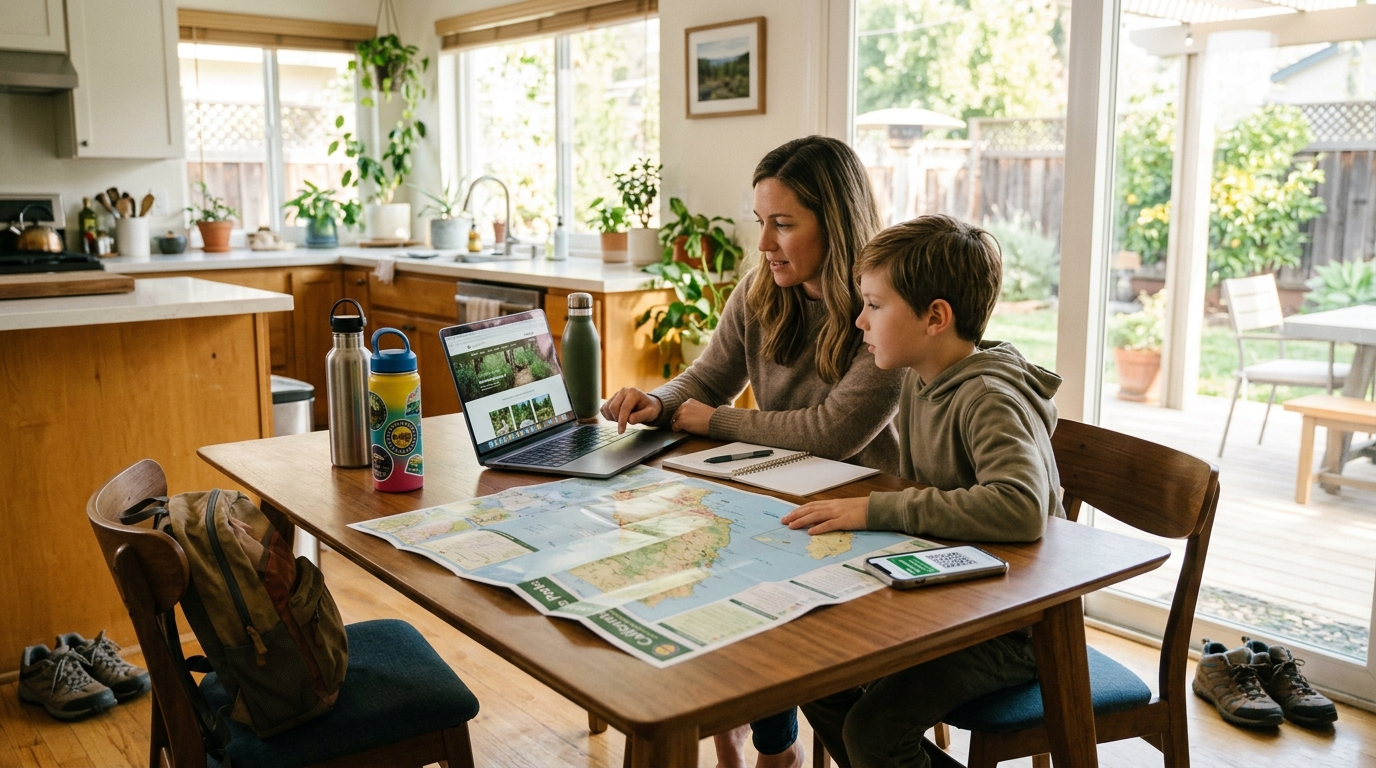
A parent or guardian can obtain the pass through ReserveCalifornia. An account is required.
California State Parks says the application asks for basic information such as a name, address, phone number, and email address.
The pass is then sent by email.
Printing a copy before the trip is a good idea, even if you plan to keep it on a phone. Some parks have limited mobile service, and a dead battery should not become the reason a family cannot show the pass.
Next, check the individual park page.
Look for current operating hours, closures, parking limits, weather, fire restrictions, trail conditions, and seasonal warnings.
The fourth-grade pass does not guarantee entry when a park reaches capacity.
California State Parks notes that passholders do not receive priority when space is unavailable.
That makes early arrival useful at popular destinations, especially on holiday weekends.
If your family is also planning Yosemite, keep in mind that Yosemite is a national park rather than a California state park. Our Yosemite 2026 reservations and permits guide explains the separate federal rules for that trip.
A Simple Checklist Before Your First Free Fourth Grade Pass Trip
First, confirm that your fourth grader meets the current eligibility rules.
Next, create or sign in to the parent’s ReserveCalifornia account and obtain the pass.
Save the emailed copy and print a backup.
Choose a park from the official list of 54 participating locations. Do not assume every state park accepts the program.
Check the destination’s current conditions shortly before leaving.
Bring the fourth grader. The pass cannot be used without the eligible child present.
Budget separately for anything the pass does not cover. Camping, tours, special activities, food, fuel, and other fees may still apply.
Pack around the destination. A redwood forest requires different clothing from Anza-Borrego in the desert.
Leave extra room in the schedule with younger children. One short trail, visitor center, picnic, and viewpoint can create a better day than racing between six attractions.
Families planning overnight state-park stays should also review our 2026 camping reservation guide before booking.
For a larger California road trip, our Highway 1 Big Sur road trip guide shows how to build a flexible route around current road conditions rather than trying to cover too much coastline in one day.
The California State Parks Free Fourth Grade Pass 2026–27 is valuable because it turns one school year into many opportunities to explore the state.
Eligible fourth graders can visit 54 participating parks with family and friends without the normal eligible day-use entrance fee. The current program also starts earlier and can remain useful through August 31 of the following year.
Families should understand the limits before traveling. The pass does not pay for camping, boat use, special events, extra vehicles, or every state park.
Still, it can make regular outdoor trips much easier to justify.
A family does not need to cross California to get value from the program. One nearby redwood grove, beach, historic site, lake, or desert park may become a place worth visiting several times during the school year.
For current eligibility, the full participating-park list, and official sign-up information, visit the California State Parks Free Fourth Grade Pass page.