
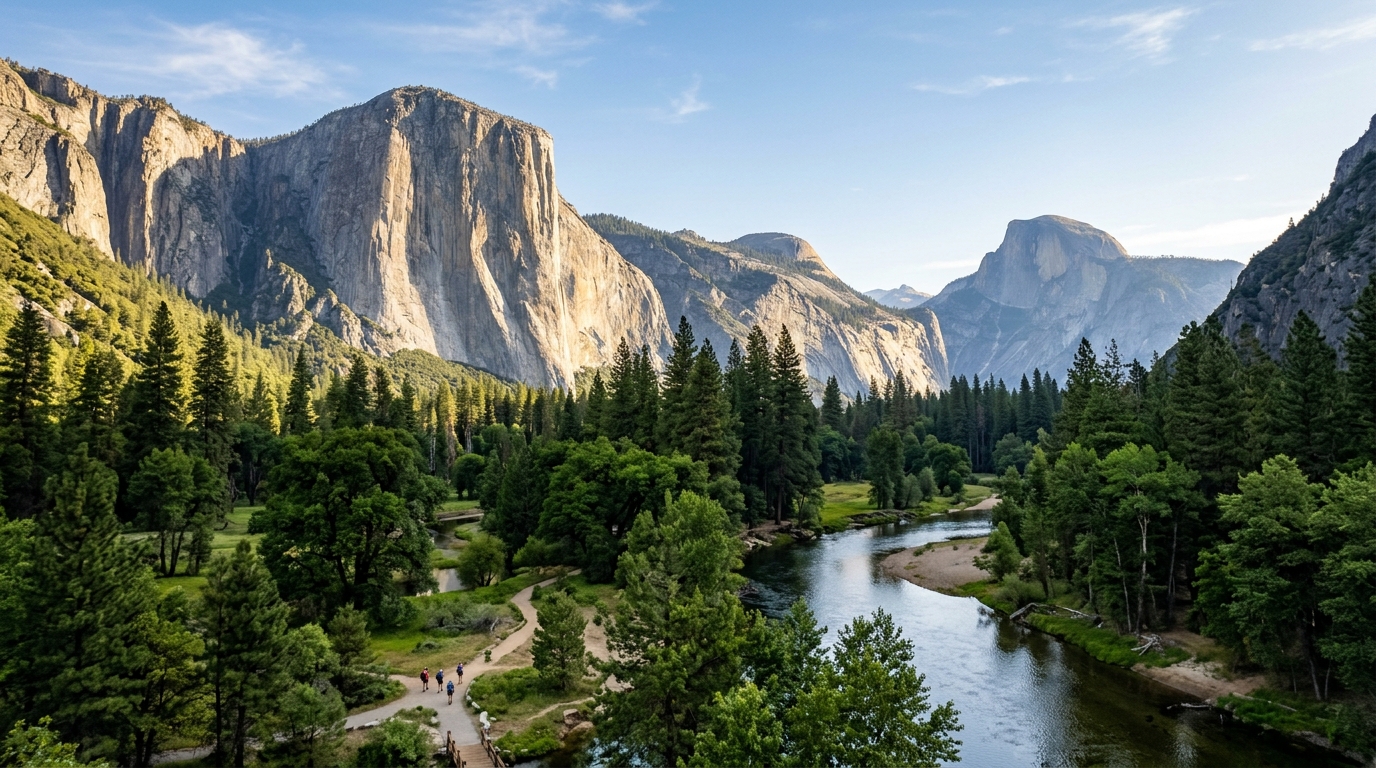
Planning a Yosemite National Park trip is a little simpler in 2026. Visitors do not need a timed entrance reservation simply to drive into Yosemite this year, a major change from reservation systems used during several recent high-demand seasons.
That does not mean visitors can arrive without planning. Yosemite remains one of California’s busiest outdoor destinations, and the difference between an entrance reservation, campground reservation, lodging booking, wilderness permit, and Half Dome permit can easily create confusion.
The simplest way to think about the 2026 system is this: ordinary park entry does not require an advance reservation, but many specific overnight stays and activities still do. Parking and traffic can also become challenging during busy periods even though the entrance reservation requirement is gone.
If Yosemite is part of a larger California trip, explore our California regions guide, things to do in California, and parks and outdoors directory for more ways to build an itinerary around the Sierra Nevada and other outdoor destinations.
Do You Need a Reservation to Enter Yosemite in 2026?
No. The National Park Service states that a reservation is not required to enter Yosemite National Park in 2026. Visitors can arrive at an entrance station and enter without previously obtaining a timed-entry reservation, subject to normal park operations and any temporary closures or restrictions.
The park announced the decision in February 2026 after evaluating traffic patterns, parking availability, visitor numbers, and operational conditions during the 2025 season. Park officials concluded that a season-wide reservation requirement was not the most effective approach for 2026.
Instead, Yosemite is relying on other traffic and visitor-management strategies. That means travelers have greater flexibility when choosing a day to visit, but popular weekends, holidays, and summer periods can still produce long waits and crowded parking areas.
For the latest official rule before your trip, check the National Park Service Yosemite entrance reservation page. Park policies and temporary operational measures can change, so official information should always take priority over old travel articles or social media posts.
Why Yosemite Dropped the Season-Wide Reservation System
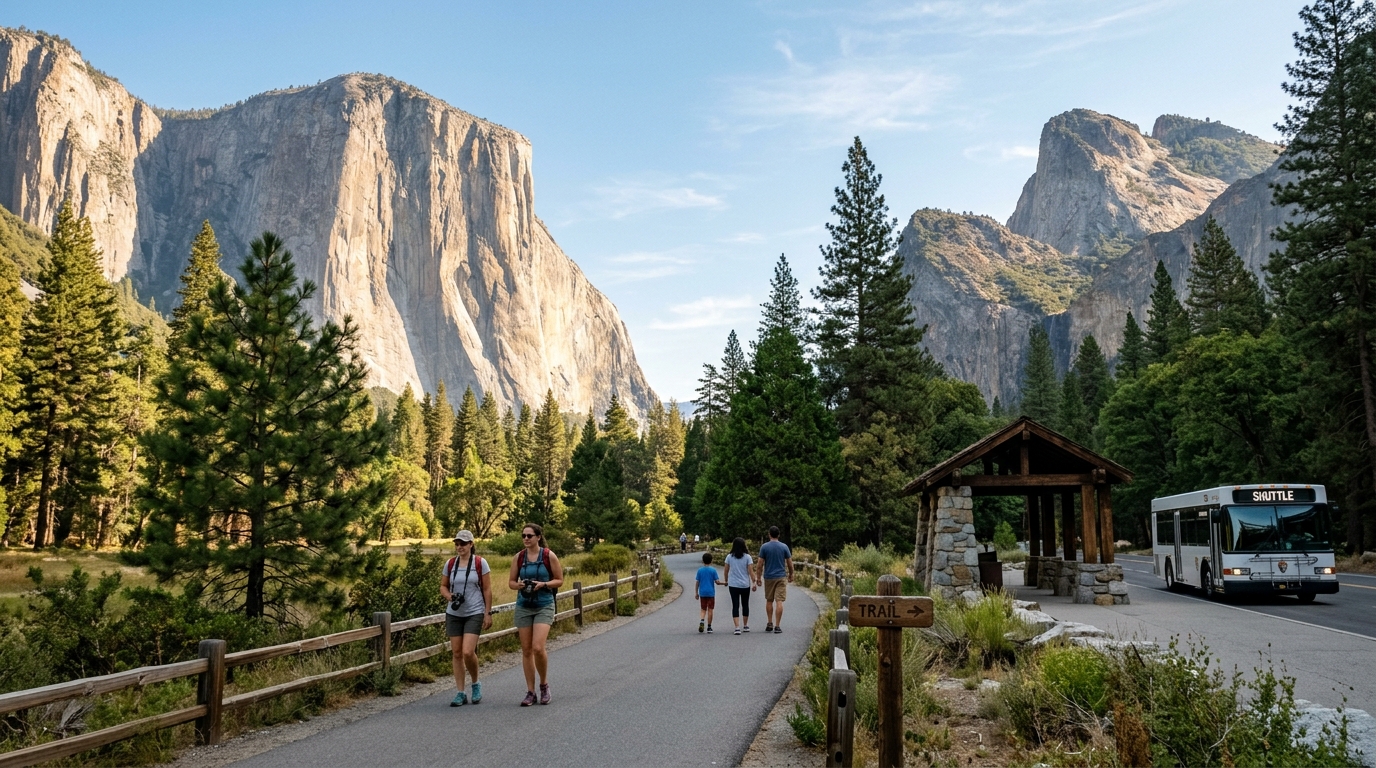
Timed-entry systems were introduced during previous high-visitation periods as Yosemite looked for ways to manage congestion, parking demand, and visitor experience. They also created an additional planning step because travelers had to secure both transportation arrangements and a specific authorization to enter during covered periods.
According to the National Park Service, its review of 2025 found that most weekdays maintained available parking, stable traffic flow, and visitation levels within the park’s operational capacity. Based on that evaluation, officials decided not to continue a broad seasonal reservation requirement in 2026.
The change makes spontaneous day trips easier. Someone staying in a nearby community can decide to visit based on weather, road conditions, or schedule without first checking whether an entrance reservation remains available.
However, easier entry may also encourage visitors to underestimate how busy Yosemite can become. The absence of a reservation requirement does not guarantee an empty parking space near Yosemite Falls, convenient access to a popular trailhead, or a traffic-free drive through Yosemite Valley.
No Entrance Reservation Does Not Mean No Planning
Yosemite’s own visitor guidance warns travelers to prepare for traffic, entrance-station waits, and limited parking during busy periods. Summer days can be particularly congested in Yosemite Valley, where many visitors concentrate around the same famous viewpoints, trails, waterfalls, lodging areas, and visitor facilities.
A practical strategy is to arrive early, park once when possible, and avoid repeatedly moving your vehicle between Valley attractions. Walking, cycling, and the park shuttle can reduce the need to search for new parking spaces throughout the day.
Travelers should also check current road conditions shortly before leaving. Mountain roads may be affected by construction, wildfire operations, storms, rockfall, snow, or other temporary restrictions. Seasonal roads such as Tioga Road and Glacier Point Road can also have opening and closing periods that differ from Yosemite Valley access.
The Yosemite Entrance Fee Still Applies
Removing the entrance reservation does not eliminate Yosemite’s regular entrance fee. Visitors still need to pay the applicable park entrance charge or use a qualifying park pass when they arrive.
The important distinction is between a fee and a reservation. The entrance fee provides admission to the park according to the terms of the pass, while a timed reservation controls whether a visitor may enter during a particular date or period. In 2026, Yosemite has the first requirement but generally not the second for ordinary entry.
This distinction is useful when reading older Yosemite travel guides. Articles from previous seasons may describe a vehicle reservation system that does not apply to the broad 2026 season. Always check the publication date before relying on reservation advice.
Which Yosemite Reservations and Permits Are Still Required?
The removal of the general entrance reservation does not turn Yosemite into a reservation-free park. Travelers who want to stay overnight or participate in specific high-demand wilderness activities still need to pay close attention to separate booking and permit systems.
This is where many visitors get confused. A campground reservation is not the same thing as a park entrance reservation. A wilderness permit is different from both. Half Dome has another permit system, while lodging inside Yosemite is booked separately.
Before choosing dates, decide what kind of Yosemite trip you actually want. A simple day visit requires much less advance organization than a multi-night camping trip or a backpacking itinerary that includes Half Dome.
Camping and Lodging Should Still Be Reserved Early
If you want to sleep inside Yosemite, advance planning remains extremely important. Yosemite’s campgrounds are popular, and many sites require reservations. Lodging inside the park is also in high demand, especially from spring through fall and around holidays.
A visitor who cannot secure accommodation inside Yosemite can consider communities outside the park and drive in for the day. That is easier in 2026 because a general entrance reservation is not required, although driving distances and entrance-station traffic should be included in the schedule.
Browse our California hotels and stays directory when comparing accommodation for a Sierra Nevada itinerary. Staying outside Yosemite can also make it easier to combine the park with nearby communities, scenic drives, and other California attractions.
If camping is the priority, do not assume arriving at an entrance station guarantees a campsite. Treat overnight accommodation and park entry as two separate planning questions.
Wilderness and Half Dome Permits Have Separate Rules
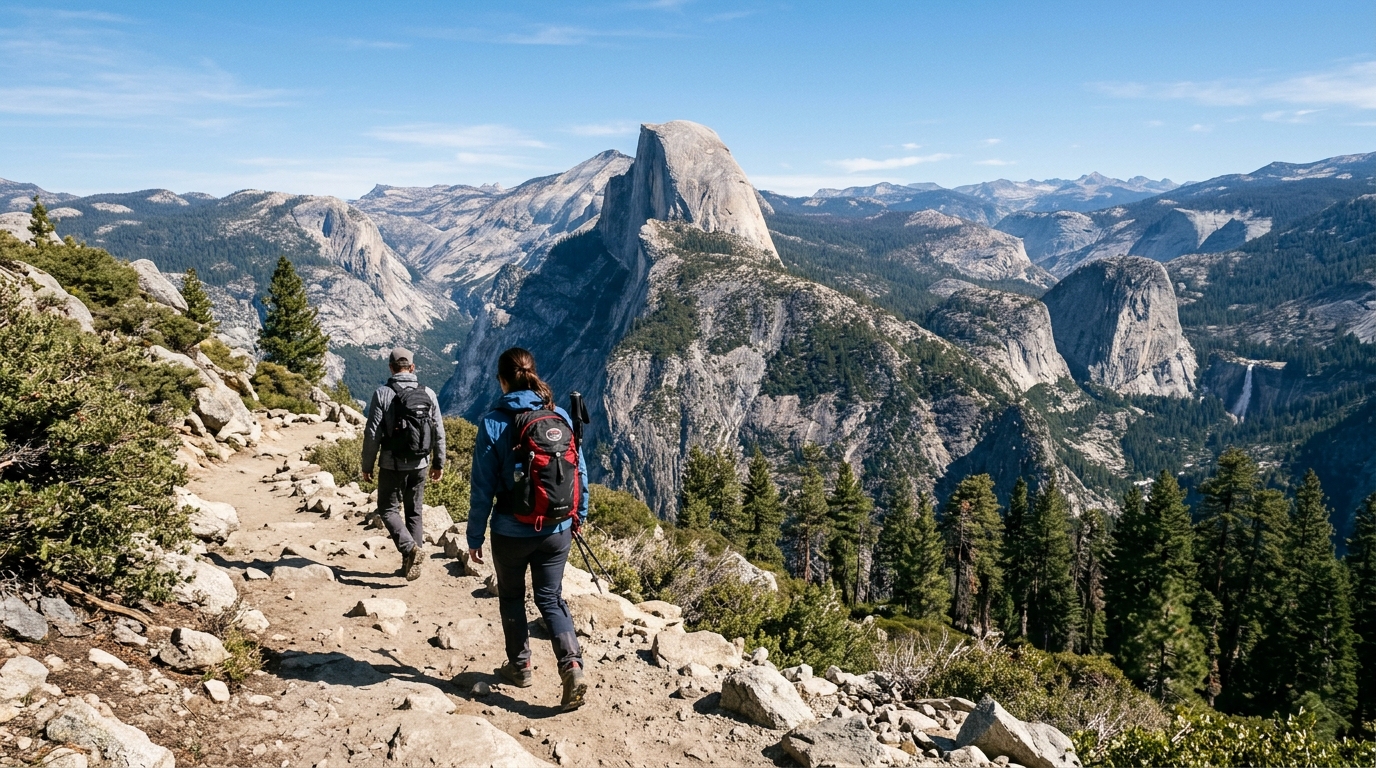
Anyone planning an overnight backpacking trip in Yosemite’s wilderness needs a wilderness permit. The park manages trailhead quotas to limit the number of people beginning overnight trips from each location, and popular routes can be highly competitive.
For 2026, Yosemite’s wilderness reservation process makes permits available through Recreation.gov, with much of the quota released through advance lotteries and additional space released closer to the trip date.
Half Dome has another requirement. A permit is required to hike to the summit using the cables when they are up. Day hikers generally obtain those permits through the Half Dome permit system, while eligible wilderness permit holders have a separate process for adding Half Dome access to qualifying overnight itineraries.
Do not assume that entering Yosemite gives you permission to hike Half Dome. The ability to drive through the entrance station and the authorization to use the Half Dome cables are completely different things.
How to Plan a Better Yosemite Trip Without an Entrance Reservation
The easier 2026 entry rules create more flexibility, but the best Yosemite trips still begin with realistic expectations. Yosemite is enormous, and trying to see every famous location in one day usually results in more driving and parking than actual exploring.
For a first visit, choose a limited geographic area. Yosemite Valley contains many of the park’s most recognizable landscapes, including El Capitan, Half Dome views, meadows, waterfalls, and access to several major trails. Spending most of the day there is often more rewarding than attempting to combine the Valley, Glacier Point, Mariposa Grove, and Tioga Road into one rushed itinerary.
Repeat visitors can build separate days around the high country, giant sequoias, longer hikes, or less heavily visited areas. Use our California county explorer to connect Yosemite with surrounding destinations and our parks and outdoors directory for other outdoor stops.
Arrive Early, Park Once, and Leave Flexibility in Your Day
Without a timed entrance slot, visitors have more control over their arrival time. Use that flexibility to your advantage. Early arrival can reduce entrance delays and improve the chance of finding convenient parking before the busiest part of the day.
Once parked in Yosemite Valley, consider using the free shuttle system rather than driving to every attraction. The Valleywide shuttle serves lodging, food services, campgrounds, and trailheads, making it useful for visitors who want to reduce repeated parking searches.
Build flexibility into the itinerary as well. A trail may take longer than expected, a viewpoint may be crowded, or traffic might delay your next stop. Yosemite is not a destination where every hour needs to be scheduled.
Weather and seasonal conditions should also shape the trip. Waterfalls vary dramatically throughout the year, high-country roads are seasonal, and hiking conditions depend on elevation, snowpack, heat, fire activity, and recent weather. Check current National Park Service conditions immediately before traveling instead of assuming that a route described in an older article is open.
Yosemite
For visitors continuing beyond Yosemite, California offers plenty of alternatives and extensions. You can explore the state’s expanding park system in our guide to three new California state parks in the Central Valley or head west toward the coast with our 2026 Highway 1 Big Sur road trip guide.
The key Yosemite change for 2026 is straightforward: you can enter without securing a general timed reservation first. But successful visits still require attention to accommodation, activity permits, traffic, road conditions, and seasonal access.
Use the extra flexibility to create a slower trip rather than an overloaded one. Choose a few priorities, arrive prepared, reserve the experiences that actually require reservations, and leave enough time to appreciate why Yosemite remains one of California’s most extraordinary landscapes.